Dental Implants vs Dentures: Making the Right Choice for Your Smile in Suwanee, GA
Facing tooth loss can feel overwhelming, but today’s restorative dentistry offers excellent solutions to restore your smile, confidence, and quality of life. At B-You Dentistry, your trusted dentist in Suwanee, GA, we help patients navigate one of the most common questions in tooth replacement: should I choose dental implants or dentures? Both options have successfully restored smiles for millions of people, but they work very differently and suit different situations, budgets, and lifestyles.
Understanding the differences between dental implants and dentures—how they function, their advantages and limitations, longevity, maintenance requirements, and overall impact on your daily life—empowers you to make an informed decision that aligns with your personal needs and goals. There’s no universal best option; the right choice depends on your unique situation, including the number of teeth you’re replacing, your jawbone health, your lifestyle preferences, and various other factors.
This comprehensive comparison explores every aspect of dental implants versus dentures, providing the detailed information you need to have productive conversations with your dentist and ultimately choose the tooth replacement solution that will serve you best for years to come. Whether you’re replacing a single tooth, multiple teeth, or all your teeth, understanding these options thoroughly helps ensure you make a choice you’ll be happy with long-term.
Understanding Dental Implants
Before comparing options, let’s explore what dental implants are and how they work.
What Are Dental Implants?
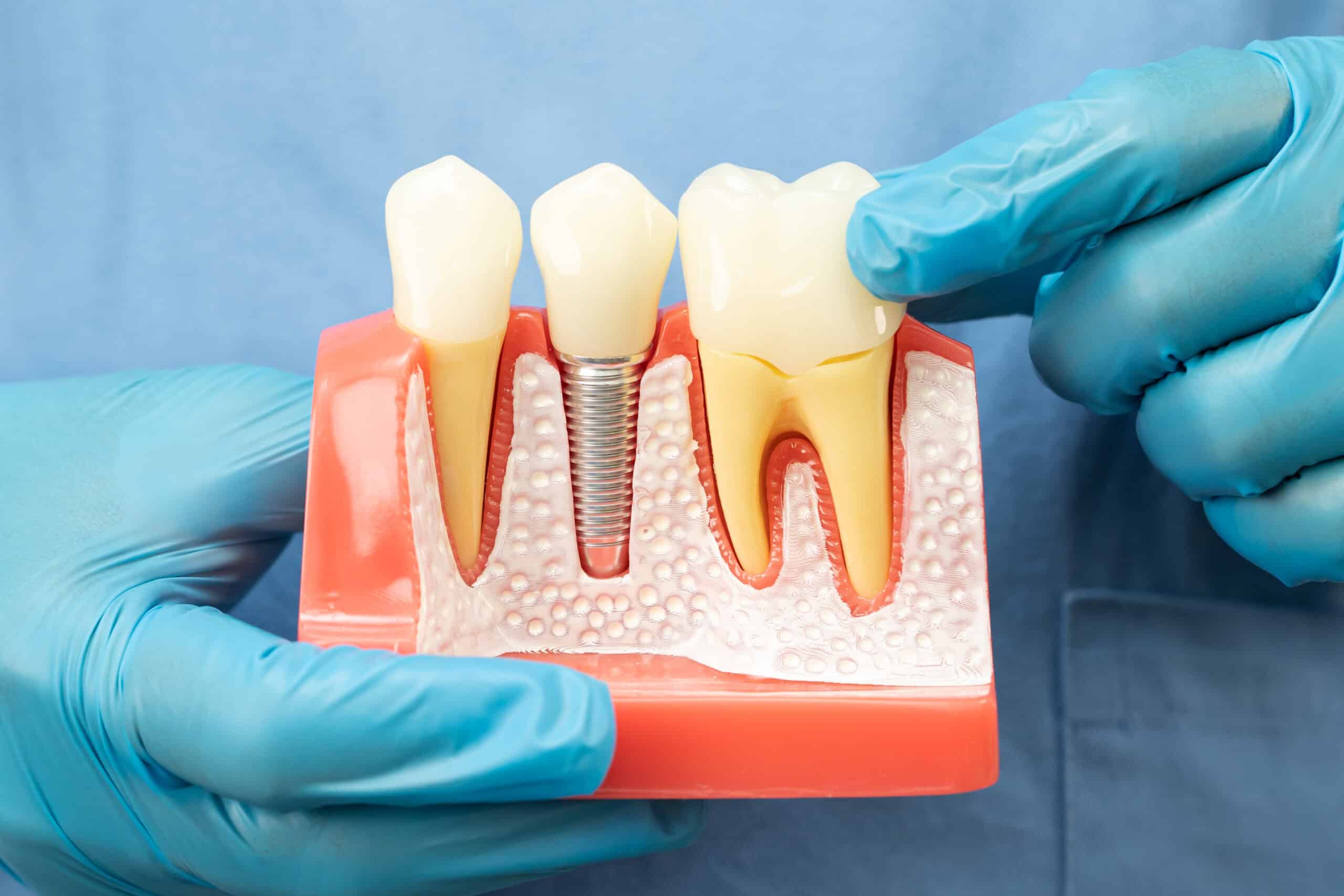
Permanent Tooth Replacement: Dental implants are titanium posts surgically placed into your jawbone, serving as artificial tooth roots that support replacement teeth.
Complete System: A dental implant has three components that work together:
- Implant post: Titanium screw placed in jawbone
- Abutment: Connector piece attached to the post
- Crown: Custom-made replacement tooth attached to abutment
How They Work: Through a process called osseointegration, your jawbone grows around and fuses with the titanium implant, creating a permanent, stable foundation that functions like a natural tooth root.
Replacement Options:
- Single tooth: One implant supports one crown
- Multiple teeth: Several implants can support a bridge
- Full arch: Four to six implants can support a complete set of teeth
The Implant Process
Multi-Stage Procedure: Getting dental implants is a gradual process that occurs over several months.
Typical Timeline:
- Initial consultation: Evaluation, imaging, treatment planning
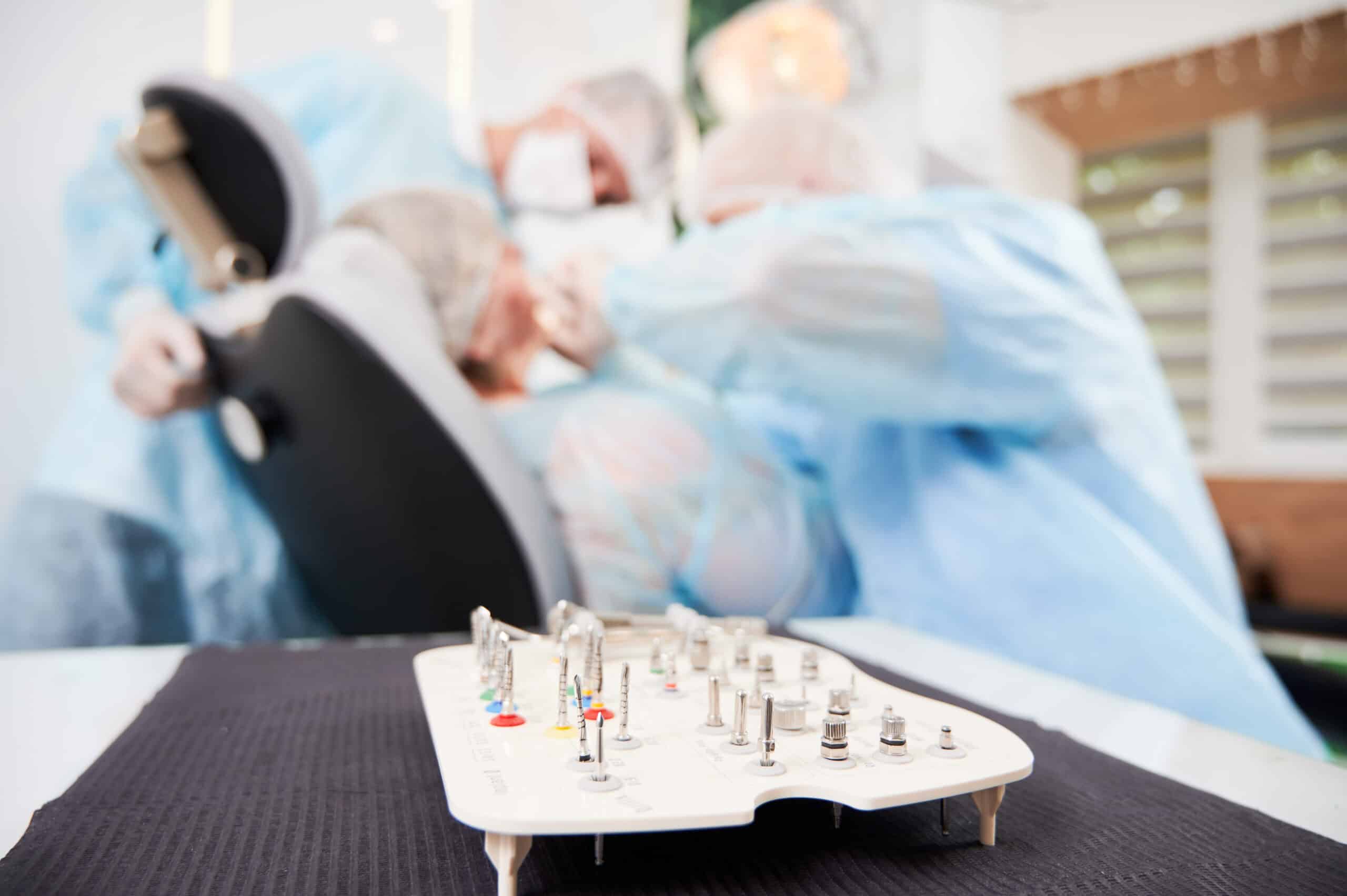
- Implant placement surgery: Post inserted into jawbone
- Healing period: Three to six months for osseointegration
- Abutment placement: Connector attached to implant
- Crown fabrication: Custom tooth created
- Final restoration: Crown permanently attached
Additional Procedures: Some patients need bone grafting or sinus lifts before implant placement if jawbone density is insufficient, extending the overall timeline.
Implant Advantages
Why Patients Choose Implants: Dental implants offer several significant benefits that make them appealing despite higher initial investment.
Key Benefits:
- Natural feel and function: Feels and works like your own teeth
- Preserves jawbone: Prevents bone loss that occurs with missing teeth
- No impact on adjacent teeth: Doesn’t require altering neighboring teeth
- Excellent longevity: Can last a lifetime with proper care
- Stable and secure: No slipping or movement
- No dietary restrictions: Eat whatever you want
- Easy maintenance: Care for them like natural teeth
- Superior comfort: Becomes part of your mouth
- Natural appearance: Looks completely authentic
Understanding Dentures
Now let’s explore traditional dentures and how they compare.
What Are Dentures?
Removable Tooth Replacement: Dentures are removable appliances that replace missing teeth, sitting on top of your gums rather than being anchored in your jawbone.
Types of Dentures:
- Complete dentures: Replace all teeth in upper or lower arch
- Partial dentures: Replace some teeth, attaching to remaining natural teeth
- Immediate dentures: Placed immediately after tooth extraction
- Conventional dentures: Made after healing from extractions is complete
How They Work: Dentures rely on suction, adhesive, or clasps (for partials) to stay in place, resting on your gum tissue and any remaining teeth.
The Denture Process
Faster Initial Timeline: Getting dentures is typically quicker than dental implants.
Typical Process:
- Consultation and planning: Evaluation, impressions, planning
- Tooth extraction if needed: Remove remaining damaged teeth
- Healing period: Usually six to eight weeks after extractions
- Impressions and measurements: Multiple appointments for fitting
- Try-in appointment: Test fit and appearance
- Final delivery: Receive completed dentures
- Adjustment period: Learn to use and get comfortable
Timeline: The entire process typically takes two to three months from start to finish, significantly faster than dental implants.
Denture Advantages
Why Patients Choose Dentures: Dentures have been helping people for generations and offer several benefits.
Key Benefits:
- Lower initial investment: More budget-friendly upfront
- Faster process: Get teeth sooner than with implants
- Non-surgical option: No surgery required
- Easier to adjust or replace: Can modify as needed
- Suitable for most patients: Fewer health restrictions
- Can be immediate solution: Temporary dentures available same day as extractions
- Reversible option: Not permanent if circumstances change
Side-by-Side Comparison
Let’s compare dental implants and dentures across key factors that matter most to patients.
Stability and Security
Dental Implants: Implants are anchored directly into your jawbone, providing rock-solid stability. They don’t move, slip, or shift during eating or speaking. You can bite with nearly the same force as natural teeth, allowing you to eat any foods confidently. There’s no worry about embarrassing slipping or clicking sounds.
Dentures: Traditional dentures rest on your gums and rely on suction or adhesive for retention. They can shift during eating or speaking, especially lower dentures which have less surface area for suction. Many denture wearers experience occasional slipping, particularly when eating sticky or hard foods. Adhesives help but don’t provide the same security as implants.
Winner for Stability: Dental implants provide superior stability and security.
Comfort and Feel
Dental Implants: After the initial healing period, implants feel natural and become part of your mouth. You don’t notice them or think about them differently than your natural teeth. There’s no bulk covering the roof of your mouth, and your tongue has full range of motion. Most patients forget they even have implants.
Dentures: Dentures, especially upper dentures, cover the roof of your mouth with acrylic material. This can feel bulky initially and may affect taste sensation and temperature perception. Many people adapt over time, but some find dentures uncomfortable or constantly aware of them. Lower dentures can feel less secure and more intrusive to the tongue.
Winner for Comfort: Dental implants feel more natural and comfortable long-term.
Eating and Diet
Dental Implants: With implants, you can eat whatever you want with no restrictions. Bite into apples, enjoy corn on the cob, eat steak, crunch on nuts—everything is back on the menu. Chewing efficiency is nearly identical to natural teeth, meaning you can properly break down all foods for good digestion and nutrition.
Dentures: Denture wearers typically need to avoid or be very careful with certain foods. Hard foods like nuts, sticky foods like caramel, chewy foods like bagels, and foods requiring strong biting force like corn on the cob can be challenging or impossible. Chewing efficiency is reduced to about twenty-five to fifty percent of natural teeth, potentially affecting nutrition and food enjoyment.
Winner for Diet Freedom: Dental implants allow unrestricted eating.
Speech and Pronunciation
Dental Implants: Implants don’t affect speech. Because they’re individual teeth anchored in your jaw, your tongue, lips, and mouth function normally. There’s no adjustment period for speaking, and no ongoing speech challenges.
Dentures: New denture wearers often experience temporary speech difficulties as they adapt to the bulk and feel of dentures. Certain sounds (s, f, th) can be particularly challenging. While most people adjust within a few weeks, some continue experiencing minor speech changes, especially if dentures don’t fit perfectly or shift during speaking.
Winner for Natural Speech: Dental implants have no impact on speaking ability.
Bone Preservation
Dental Implants: This is where implants truly shine. Because the titanium post stimulates your jawbone just like a natural tooth root, it prevents the bone loss that normally occurs after tooth loss. Implants actually preserve and maintain your jawbone density and volume, keeping your facial structure intact over time.
Dentures: Without tooth roots stimulating the jawbone, bone resorption (loss) occurs continuously under dentures. Over years, this leads to significant bone loss, causing your jaw to shrink, your face to appear more sunken, and your dentures to fit poorly. This progressive bone loss means dentures need frequent adjustments and eventual replacement as your jaw shape changes.
Winner for Bone Health: Dental implants preserve jawbone; dentures allow continued bone loss.
Impact on Adjacent Teeth
Dental Implants: Implants are standalone restorations that don’t affect neighboring teeth. In fact, by filling the gap where a tooth is missing, they prevent adjacent teeth from shifting into the space, which helps maintain your bite alignment.
Partial Dentures: Partial dentures use clasps that hook onto adjacent natural teeth for stability. Over time, this constant pressure can damage those anchor teeth, potentially leading to their loss as well. The clasps can also be visible when you smile, affecting aesthetics.
Winner for Protecting Other Teeth: Dental implants don’t impact adjacent teeth; partials can damage them.
Maintenance and Care
Dental Implants: Caring for implants is straightforward—brush and floss just like natural teeth. Regular dental checkups and cleanings are important, but there’s no special maintenance routine. The crown may eventually need replacement after many years of use, but the implant itself can last a lifetime.
Dentures: Dentures require more involved care. You must remove them nightly for cleaning, soak them properly, brush your gums and any remaining teeth, and keep them in a safe place. Denture adhesive needs daily application and removal. Dentures also require professional adjustments as your mouth changes shape, and typically need replacement every five to ten years.
Winner for Easy Care: Dental implants require simpler, more natural maintenance.
Longevity and Durability
Dental Implants: With proper care, dental implants can last a lifetime. The titanium post rarely fails once osseointegration is complete. The crown on top may need replacement after ten to fifteen years due to normal wear, but this is a simple procedure. Success rates exceed ninety-five percent, and many implants function perfectly for thirty years or more.
Dentures: Traditional dentures typically last five to ten years before needing replacement due to wear, staining, or changes in jaw shape from bone loss. They can crack, break, or wear down over time. Even with the best care, dentures are not a permanent solution and require ongoing replacement throughout your life.
Winner for Longevity: Dental implants last significantly longer, often a lifetime.
Aesthetics and Appearance
Dental Implants: Implant-supported teeth look completely natural because they emerge from your gums like natural teeth. There are no visible clasps, no gum-colored acrylic, and no bulk. The crown is custom-made to match your other teeth in color, shape, and size. Most people can’t tell which teeth are implants.
Dentures: Modern dentures can look quite natural when professionally made and properly fitted. However, they can sometimes appear artificial, especially if the fit becomes poor over time. Partial dentures may have visible metal clasps. The acrylic can look bulky, and the teeth might appear overly uniform. As facial structure changes from bone loss, dentures can contribute to an aged appearance.
Winner for Natural Appearance: Dental implants look more natural and maintain facial structure.
Weeks 2-4: Transitioning to Normal Activities
After the critical first week, healing accelerates and you can gradually return to normal activities.
Expanding Your Diet
Gradual Progression: As discomfort decreases and healing progresses, slowly reintroduce regular foods.
Week 2-3 Food Additions:
- Soft pasta: Well-cooked, easy to chew
- Tender fish: Flaky, soft texture
- Cooked vegetables: Soft, not crunchy
- Soft breads: Avoid crusty or chewy varieties
- Ground meat: If well-cooked and tender
- Soft fruits: Bananas, melons, soft berries
Gradual Chewing: Start with very soft foods that require minimal chewing, then progress slowly. Listen to your body and don’t rush reintroducing hard or chewy foods.
Still Avoiding: Continue avoiding very hard, crunchy, or sticky foods for several more weeks. Your dentist will tell you when you can resume completely normal eating.
Returning to Physical Activity
Activity Guidelines: Physical exertion can affect healing, so reintroduce exercise gradually.
First 48 Hours: Complete rest with minimal physical activity.
Days 3-7: Light walking only, no strenuous exercise.
Week 2:
- Light exercise may resume if healing well
- Avoid heavy lifting
- No contact sports
- Monitor for increased swelling or discomfort
Week 3-4: Gradually return to normal exercise routine based on how you feel and your dentist’s guidance.
Warning Signs: If exercise causes renewed bleeding, significant swelling, or throbbing pain, you’re doing too much too soon. Stop activity and contact your dentist.
Follow-Up Appointments
Why They Matter: Follow-up visits allow your dentist in Suwanee, GA to monitor healing and address any concerns early.
Typical Schedule:
- 1-2 weeks post-surgery: Check healing progress, remove stitches if non-dissolvable
- 4-6 weeks: Evaluate osseointegration beginning
- 3-4 months: Assess whether implant is ready for crown placement
What Your Dentist Checks:
- Healing of gum tissue
- Signs of infection
- Implant stability
- Your comfort level
- Oral hygiene around implant
- When to proceed to next phase
Never Skip Appointments: These visits are crucial for catching potential problems early when they’re easiest to address.
Financial Considerations
Understanding the investment required for each option helps in decision-making.
Initial Investment Differences
Dental Implants: Implants require higher upfront investment because they involve surgical placement, high-quality materials, and multiple appointments over several months. A single implant with crown represents significant expense, and multiple implants increase accordingly.
Dentures: Dentures have lower initial expense, making them more immediately accessible for many patients. The process is less complex and doesn’t involve surgery, contributing to lower upfront investment.
Budget-Friendly Option Initially: Dentures have lower initial expense.
Long-Term Value
Dental Implants: While implants require higher initial investment, their longevity means you may never need replacement. Over twenty to thirty years, the per-year expense is often quite reasonable. You avoid ongoing replacement needs, frequent adjustments, and adhesive purchases that dentures require.
Dentures: Though dentures have lower initial expense, they need replacement every five to ten years throughout your life. Add in regular adjustments, relines, repairs, and daily adhesive purchases, and the long-term financial commitment can actually exceed implants over time.
Long-Term Value Winner: Dental implants often provide better value over a lifetime.
Insurance and Payment Options
Coverage Variations: Dental insurance coverage varies significantly between providers and plans. Many plans provide partial coverage for dentures but may not cover implants, or may cover only a portion. Some plans are beginning to recognize implants’ value and offering limited coverage.
Financing Solutions: Your dentist in Suwanee, GA can discuss payment plans, financing options, and ways to make either treatment more accessible. Many practices offer flexible payment arrangements to help patients get the care they need.
Health and Eligibility Factors
Not everyone is a candidate for every tooth replacement option.
Who Is a Good Candidate for Implants?
Ideal Implant Candidates: Most healthy adults can get dental implants, but certain factors improve success rates.
Requirements:
- Adequate bone density: Sufficient jawbone to support implant
- Healthy gums: Free from periodontal disease
- Good general health: Able to heal from surgery normally
- Non-smoker or willing to quit: Smoking significantly reduces success
- Committed to oral hygiene: Willing to maintain excellent care
- Realistic expectations: Understanding of process and timeline
Potential Obstacles: Some conditions like uncontrolled diabetes, active cancer treatment, or severe osteoporosis may make implants more challenging, but often these can be managed with medical clearance and careful planning.
Who Is a Good Candidate for Dentures?
Universal Accessibility: Dentures suit almost everyone, regardless of bone density, general health conditions, or other factors that might complicate surgery.
Ideal for:
- Patients who prefer non-surgical options
- Those with insufficient bone for implants who don’t want grafting
- People with certain medical conditions that preclude surgery
- Patients seeking faster results
- Those who need immediate tooth replacement
Flexibility: Dentures accommodate a wider range of health situations and personal preferences.
Sometimes the best answer combines both technologies.
Implant-Supported Dentures
Best of Both Worlds: Implant-supported dentures use several implants to anchor dentures securely, combining the stability of implants with some practical advantages of dentures.
How It Works: Typically, four to six implants are placed in your jaw. A specially designed denture clicks or screws onto these implants, providing much better stability than traditional dentures while being less expensive than replacing every tooth with individual implants.
Benefits:
- More stable than traditional dentures
- Prevents bone loss
- Lower expense than full implant replacement
- Removable for cleaning
- Natural feel and function
- No palate coverage on upper dentures
Popular Option: This middle-ground solution appeals to many patients seeking better stability than traditional dentures but preferring lower investment than individual implant crowns.
Partial Dentures vs Implants for Multiple Teeth
Gap Solutions: When replacing several teeth, you can choose between a partial denture (removable) or a bridge supported by implants (fixed).
Considerations: The number of teeth missing, their location, your bone quality, and your preferences all influence which option serves you best. Your dentist can present both solutions with pros and cons specific to your situation.
Recognizing and Addressing Complications
While complications are rare, knowing warning signs ensures quick intervention if needed.
Signs of Infection
Early Detection: Most infections respond well to treatment if caught early.
Warning Signs:
- Increasing pain: Pain that worsens instead of improving
- Fever: Temperature over 100.4°F
- Pus or discharge: Yellow or white drainage from implant site
- Bad taste: Persistent foul taste in mouth
- Swelling that returns: Swelling that increases after initially decreasing
- Red, hot tissue: Inflamed tissue around implant
Immediate Action: Contact your dentist in Suwanee, GA immediately if you notice these symptoms. Early antibiotic treatment usually resolves infections quickly.
Implant Mobility
Stability Concerns: A properly healing implant should feel completely solid and immobile.
Concerning Signs:
- Movement when touching: Implant or crown feels loose
- Rocking sensation: Feels unstable when pressing on it
- Pain with pressure: Hurts when biting or touching
Don’t Wait: Any mobility requires immediate dental evaluation to determine the cause and appropriate intervention.
Persistent Pain
Normal vs. Abnormal Pain: Understanding pain patterns helps you know when to seek help.
Normal Pain:
- Decreases steadily day by day
- Responds well to prescribed pain medication
- Mostly resolved within 7-10 days
Concerning Pain:
- Increases after initial decrease
- Severe pain not controlled by medication
- Sharp, shooting pains
- Pain that prevents eating or sleeping
- Persistent pain beyond 2 weeks
When to Call: If pain doesn’t follow the expected improvement pattern or suddenly worsens, contact your dentist for evaluation.
Special Recovery Considerations
Some patients have unique situations requiring modified recovery approaches.
Multiple Implants
Extended Recovery: Patients receiving multiple implants may experience slightly longer recovery periods.
Differences:
- More extensive swelling initially
- May take longer to return to normal eating
- Might need to stagger intense activities longer
- Overall healing timeline similar, just more area healing
Same Principles: Follow all the same care guidelines but be patient with yourself as your body heals larger surgical areas.
Bone Grafting Patients
Combined Procedures: If you needed bone grafting before or during implant placement, recovery includes healing both procedures.
Additional Considerations:
- Graft site needs to integrate before implant can be loaded
- May extend overall timeline by several months
- Even more important to avoid pressure on surgical site
- Excellent nutrition particularly crucial for bone development
Extended Timeline: Grafted bone typically needs 4-6 months to integrate before implant placement or loading, but creates a stronger foundation for long-term success.
Patients with Medical Conditions
Special Circumstances: Certain health conditions require extra monitoring during healing.
Conditions Requiring Extra Care:
- Diabetes: May slow healing; excellent blood sugar control crucial
- Osteoporosis: Bone integration may take longer; medication timing important
- Autoimmune conditions: Healing may be less predictable
- Blood thinners: Bleeding management requires extra attention
Close Communication: Keep both your dentist and physician informed about your healing progress and any concerns.
Making Your Decision
With all this information, how do you actually choose?
Questions to Ask Yourself
Personal Considerations:
- Budget reality: What can you invest now, and what’s your long-term budget?
- Timeline: Do you need teeth immediately, or can you wait several months?
- Priorities: Is stability most important, or is avoiding surgery your priority?
- Lifestyle: Do you want to forget about your teeth, or are you comfortable with removal and maintenance?
- Long-term goals: Are you looking for a permanent solution or a solution for now?
- Health factors: Do any health conditions influence your options?
There’s No Wrong Answer: Both implants and dentures successfully restore smiles. The right choice is the one that fits your unique situation, preferences, and goals.
Consulting with Your Dentist
Professional Evaluation: Your dentist in Suwanee, GA can assess your specific situation through examination, x-rays, and discussion of your needs.
During Your Consultation:
- Complete oral health evaluation
- Bone density assessment if considering implants
- Discussion of your lifestyle and preferences
- Review of your health history
- Presentation of options with pros and cons
- Opportunity to ask questions
- Development of personalized treatment plan
Partnership Approach: The best decisions come from collaboration between you and your dentist, combining clinical expertise with your personal priorities.
Starting with What’s Right for You Now
Flexibility Over Time: Your tooth replacement choice doesn’t have to be forever. Some patients start with dentures and transition to implants later when circumstances allow. Others begin with partial solutions and expand over time.
No Rush: Take time to understand your options, consider your priorities, and make a decision you feel confident about. Your dentist will support whatever choice you make and help you achieve the best possible outcome.
Your Next Steps
Ready to restore your smile?
Schedule a Comprehensive Evaluation
Personalized Assessment: Your unique situation deserves individual attention. During your evaluation, your dentist will assess your oral health, bone structure, remaining teeth, and overall health to recommend the best options for you.
No-Pressure Consultation: This is your opportunity to learn, ask questions, and explore possibilities without any commitment. Knowledge empowers you to make the right decision for your circumstances.
Discuss All Your Options
Open Conversation: Share your concerns, priorities, and questions openly. Discuss budget, timeline, lifestyle needs, and any fears or worries you have. Your dentist is your partner in finding the solution that works best for you.
Custom Solutions: Treatment plans can be tailored to your specific needs, sometimes combining approaches or phasing treatment over time.
Contact B-You Dentistry
Expert Guidance Awaits:
- Call: +1 470-866-5801 to schedule your tooth replacement consultation
- Location: 5355 Laurel Springs Pkwy, Suwanee, GA 30024
- Serving: Suwanee, Johns Creek, Duluth, Sugar Hill, Buford, and surrounding communities
Whether you choose dental implants, dentures, or a combination solution, restoring your smile improves your quality of life in countless ways. At B-You Dentistry, your trusted dentist in Suwanee, GA, we’re committed to helping you find the perfect tooth replacement solution for your needs, budget, and lifestyle. Contact us today to begin your journey toward a complete, confident smile!